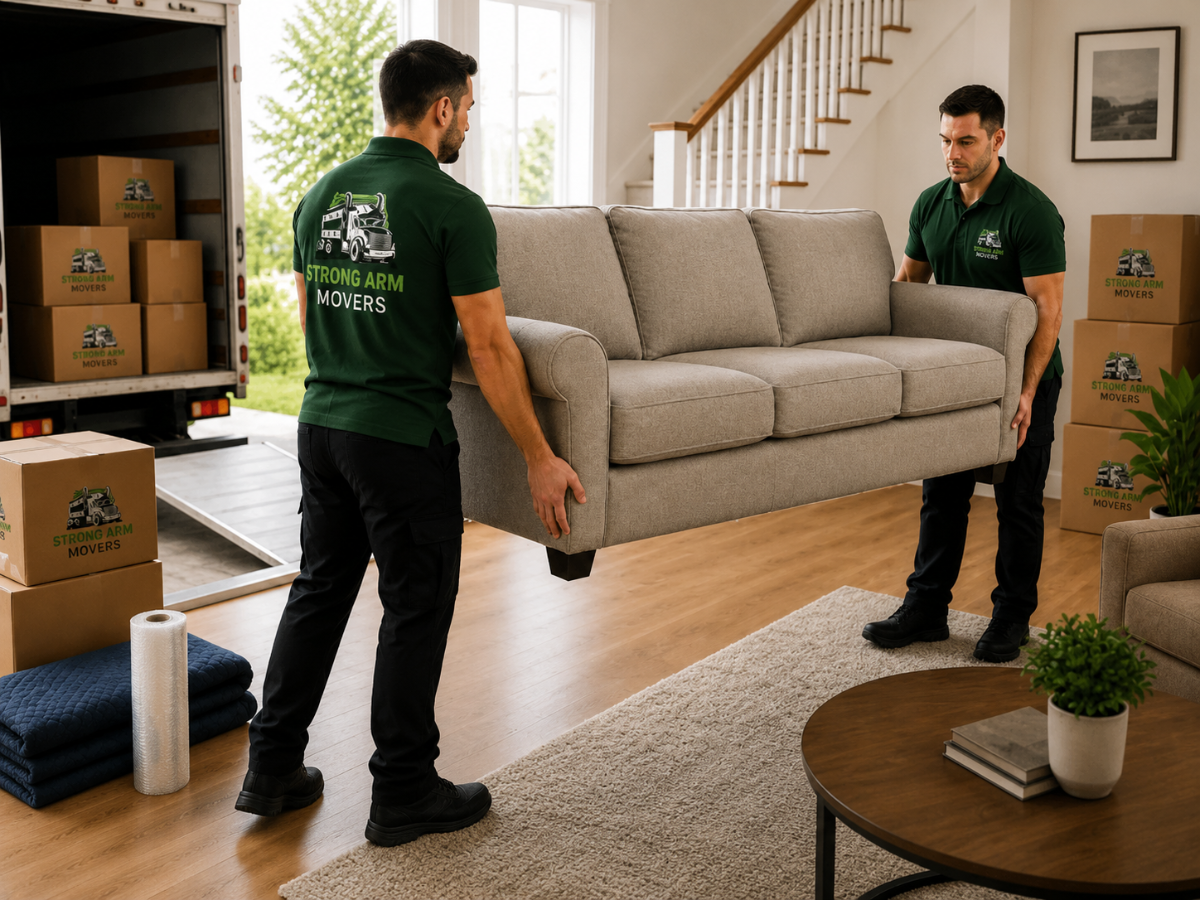
Moving to a new home is exciting, but shifting bulky furniture like your couch can quickly turn overwhelming. Your couch is likely one of the heaviest and most awkward items in your home, making it tricky to transport safely. Whether you’re moving across town or planning a long-distance relocation, proper preparation is the key to avoiding damage and injuries. At Strong Arm Movers, we’ve helped countless families relocate their furniture safely, and here’s everything you need to know about how to move a couch the right way.
Why Moving a Couch Is a Challenge
A couch might seem like just another piece of furniture, but anyone who has tried to move one knows the reality is far different. Between its weight, size, and awkward shape, a couch presents a unique set of challenges that can catch even experienced movers off guard.
It’s Heavier Than It Looks
Most couches tip the scales at 50 to 350 pounds, and that weight is rarely distributed evenly. Sleeper sofas hide heavy metal frames inside, while sectionals can feel twice as heavy once you try to lift them. Add in the long, low-to-the-ground design, and you have a recipe for muscle strains, pinched fingers, and serious back injuries if lifted incorrectly.
The Shape Works Against You
Couches are designed for comfort, not portability. Their length, depth, and soft edges make them nearly impossible to grip securely. Unlike boxes or tables, there are no clean handholds, which forces movers to awkwardly balance the weight while navigating through the home.
Tight Spaces Become Obstacles
Doorways, staircases, hallway corners, and elevators can quickly turn into roadblocks. A couch that fits perfectly in your living room may refuse to clear a 32-inch doorway or a tight stairwell turn. Without accurate measurements and a clear plan, you risk getting stuck, scratching walls, or damaging door frames.
Damage Risks Are Everywhere
One wrong move can lead to torn upholstery, cracked wooden frames, scuffed floors, or dented walls. Couches are especially vulnerable to moisture, dirt, and sharp edges during transport, and repairs can quickly become expensive.
Long-Distance Moves Multiply the Difficulty
Moving a couch across town is challenging enough, but interstate relocations require even more care. Experienced interstate removalists secure the couch inside the truck, protect it from temperature changes and moisture, and prevent it from shifting during hours on the road. This is where professional help from teams like Strong Arm Movers makes all the difference, ensuring your couch arrives in the same condition it left.
Understanding these challenges upfront helps you prepare the right tools, recruit enough help, and decide whether to tackle the job yourself or bring in the pros.
Tools and Materials Required for Moving a Couch
Gathering the right supplies in advance will save time and prevent damage.
Basic Packing Materials
- Moving blankets – Protect your couch from scratches, dents, and tears during transit.
- Plastic/stretch wrap – Keeps blankets in place and shields fabric from dust and moisture.
- Bubble wrap – Ideal for protecting wooden legs and decorative elements.
- Packing tape – Secures wrapping materials tightly.
Essential Moving Equipment
- Furniture sliders – Help glide the couch smoothly across floors without scratching.
- Furniture dolly or hand truck – Makes transporting heavy couches easier over long distances.
- Lifting straps – Redistribute weight to make lifting safer and reduce back strain.
How to Properly Prepare Your Couch for Moving
Taking time to prepare your couch will make the moving process far less stressful, especially when working with interstate removalists who handle long-distance transport.
Clean and Inspect the Couch
Vacuum the cushions, wipe the frame, and spot-clean stains. Cleaning also helps you identify existing damage or loose parts that need attention before the move.
Remove Cushions and Detachable Parts
Take off all loose cushions, throw pillows, and removable elements like legs or armrests. Store small hardware in a labeled zip-lock bag and tape it to the couch frame.
Protect Your Couch with Moving Blankets
Wrap the entire couch with moving blankets, covering corners and armrests. Secure them tightly with stretch wrap for double-layer protection against scratches and moisture.
Secure the Couch for Transport
Position the couch upright or on its side inside the moving truck. Use ropes or ratchet straps to anchor it to the truck walls so it doesn’t shift during transit. This is one area where the Strong Arm Movers team excels, using commercial-grade straps and trained loading techniques.
Take Photos or Label Parts (for Disassembly)
If disassembly is needed, photograph each step and label parts. These photos serve as a guide when reassembling at your new home or retrieving the couch from one of your storage spaces.
How to Move a Heavy Couch Safely
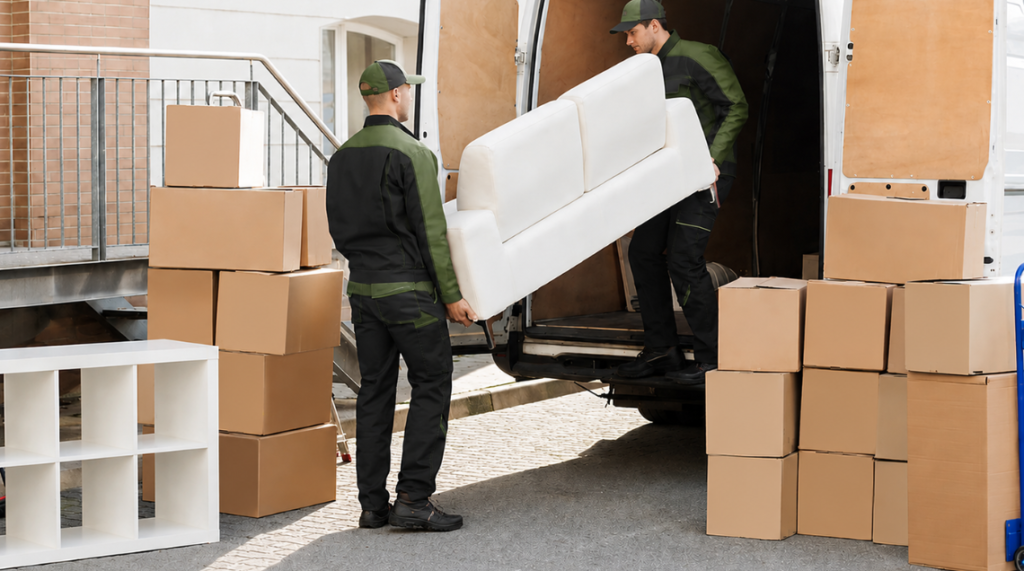
When dealing with a sleeper sofa, sectional, or oversized recliner, the standard approach may not be enough. Here’s how to move a heavy couch without injury or damage:
Recruit enough helpers.
Heavy couches require at least two strong adults, sometimes three for larger sectionals or sleeper sofas with built-in mattresses. Trying to move a bulky piece alone or with too few people leads to dropped corners, wall damage, and serious back injuries. Choose helpers who are physically capable and comfortable lifting awkward loads, and brief everyone on the plan before starting.
Use lifting straps
Lifting straps are an inexpensive but game-changing tool for moving heavy furniture. They redistribute the weight across your shoulders and legs, reducing back strain significantly while giving you a much firmer grip than hands alone. Adjustable straps work best because they can be tailored to the height of each mover, ensuring the couch stays balanced as you walk.
Clear the path first
Many injuries happen not from the couch itself but from tripping on something along the way. Remove rugs, shoes, toys, cords, and any other obstacles before attempting to lift. Open all doors fully, prop them if necessary, and make sure pets and children are kept in another room until the move is complete.
Use a furniture dolly for long distances
Carrying a heavy couch across long distances quickly drains your strength and increases the risk of dropping it. Use a furniture dolly for long distances, since rolling is always safer than carrying. Make sure the dolly is rated for the couch’s weight, secure the piece with straps to prevent shifting, and take corners slowly to avoid tipping.
Communicate constantly
Clear communication is what separates a smooth move from a disaster. Count down before lifting and call out turns, stairs, stops, and any unexpected obstacles along the way. Agree on simple commands beforehand, like “lift on three” or “step down,” so everyone reacts in sync and no one is caught off guard mid-carry.
Common Errors to Avoid When Moving a Couch
Small mistakes can lead to big problems. Here are key pitfalls to avoid.
Skipping Measurements
Always measure doorways, hallways, and staircases before moving day to confirm the couch will fit through. Don’t forget diagonal measurements, since tilting is often necessary in tight spots. A few minutes of measuring can save hours of frustration.
Not Using Protective Materials
Skipping blankets or stretch wrap often results in scratched frames and torn upholstery. Protective materials are a small investment that prevents costly repairs. Wrap the couch in moving blankets first, then secure everything with stretch wrap for full protection.
Lifting Incorrectly
Lift with your legs, not your back, and keep the couch close to your body to reduce strain. Never twist while lifting, and coordinate clearly with your partner using signals and countdowns. If it feels too heavy for two, recruit a third helper rather than risking injury.
Attempting to Move Alone
A couch is too heavy and awkward to move solo. Always enlist help from at least one other person, or consider hiring experienced house removalists like Strong Arm Movers for guaranteed safety.
Why Strong Arm Movers Is the Smart Choice for Moving Your Couch
Moving a couch on your own can quickly become the most exhausting part of any relocation, especially when you’re already managing packing, lifting, and coordinating the rest of your move. Strong Arm Movers takes that pressure off your shoulders by handling the toughest part of the job for you.
Our team arrives fully equipped with heavy-duty couch covers, moving blankets, furniture straps, sliders, and trolleys, so your sofa stays fully protected from start to finish. We carefully plan every move around your home’s layout, navigating narrow hallways, tight staircases, and awkward doorways with ease. If you’re unsure whether your couch will fit through a particular space, you can share a quick photo or measurement with our team at info@strongarmmovers.com.au and we’ll advise you before moving day.
Bulky sectionals, recliners, and oversized lounges are lifted by trained movers working in coordinated pairs, which prevents scratches, fabric tears, and personal injury. If disassembly is needed to clear a tight space, our team handles that too and reassembles everything perfectly at your new home.
For long-distance moves or short-term storage needs, we also offer flexible, climate-aware solutions that keep your couch in perfect condition throughout transit. Most customers find it easiest to call +61416011177 for a quick walkthrough of options, since couch dimensions and access points often shape the right approach.
From the moment we lift your couch to the moment we place it in your new space, our goal is simple, to make the process smooth, safe, and completely stress free.
Final Thoughts
Moving a couch doesn’t have to be a nightmare when you approach it with the right tools and techniques. Proper preparation, from measuring doorways to wrapping your couch in protective materials, makes the difference between a smooth relocation and a stressful disaster. Take the time to plan ahead, and if the job feels too big, the team at Strong Arm Movers is ready to handle the heavy lifting so your couch arrives at your new home in perfect condition.
Frequently Asked Questions
How do I move a couch through a narrow door?
Measure both the couch and the doorway first. If it’s too wide, try tilting the couch on its side or angling it diagonally using the “hook and turn” method. Removing the door from its hinges can also provide extra clearance.
Should I disassemble my couch before moving it?
If your couch has removable legs, armrests, or modular sections, disassembly will make moving easier. For solid single-piece couches, forcing disassembly can cause damage. Check the manufacturer’s instructions when in doubt.
What’s the best way to protect my couch during a move?
Combine moving blankets with stretch wrap. Cover the couch with thick blankets, padding all corners, then wrap tightly with plastic stretch wrap to shield against moisture, dust, and dirt.
Can I hire someone to move a couch?
Yes, absolutely. You can hire professional house removalists like Strong Arm Movers to handle everything from lifting and loading to transportation and setup at your new home. This is especially helpful if you have limited help, narrow access points, or a heavy piece like a sleeper sofa.
What is the cost to move a couch?
The cost to move a couch typically ranges from $100 to $600, depending on factors like distance, couch size, stairs or difficult access, and whether it’s part of a larger move. Local single-item moves usually fall on the lower end, while long-distance or specialty moves cost more. For an accurate quote tailored to your situation, contact Strong Arm Movers for a free estimate.
Should I use a professional moving service for my couch?
Hiring professionals is often worth the investment for heavy or expensive couches. Strong Arm Movers have the experience, equipment, and manpower to handle the job safely, which is especially useful for long-distance moves or tricky access points