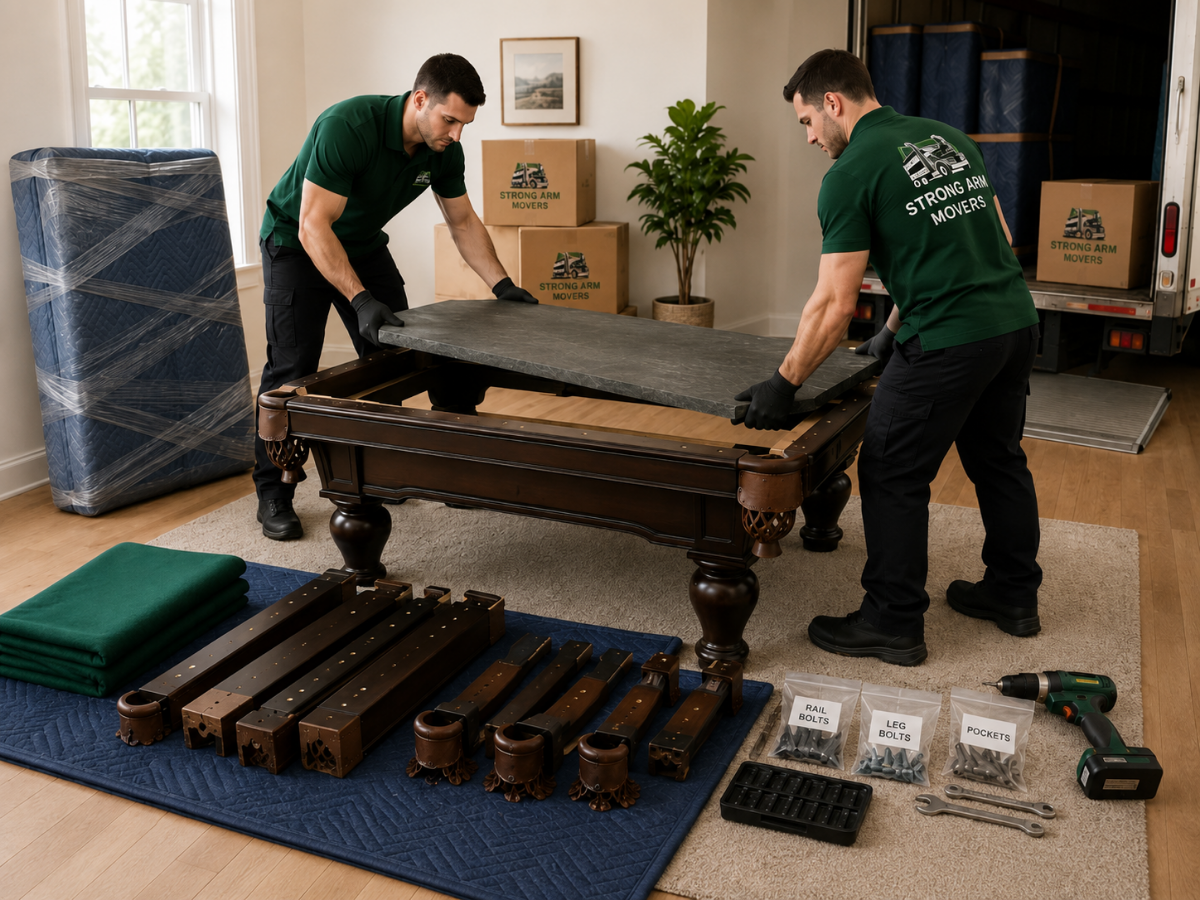
A pool table is one of the heaviest and most awkward items in any home, and it is also one of the easiest to damage if it is moved the wrong way. A standard slate table can weigh anywhere from 300 to 450 kilograms once you add up the frame, the rails and the slate bed, which is usually split into two or three pieces. That weight is not the only challenge. The slate is brittle, the felt tears easily, and even a small knock can throw the playing surface out of level for good.
The good news is that moving a pool table is completely manageable when you break it into clear stages and prepare properly. This guide from Strong Arm Movers walks you through everything from measuring your doorways to disassembling the table, protecting each part and loading it into the moving vehicle. We also cover the common mistakes that cause damaged slate and torn felt, so you can avoid them on the day.
Prepare Your Pool Table Before Moving
Good preparation is what separates a smooth pool table move from an expensive repair bill. Before you touch a single bolt, take the time to measure your space, gather the right gear and clear a safe working area. Rushing this stage is where most damage starts.
Measure Doorways and Moving Paths
Start by measuring the width of every doorway, hallway and staircase the table parts will travel through, then compare those numbers to the dimensions of the frame and slate pieces. The slate sections are usually the bulkiest single items, so plan their path first. Note any tight corners, low ceilings or narrow landings where you may need to turn a piece on its side. If a tight squeeze looks likely, work out the route before moving day rather than discovering the problem with 80 kilograms of slate in your hands.
Gather the Right Moving Equipment
Having the correct equipment ready means you are not improvising halfway through the job. Many homeowners also use professional packing and moving services when transporting heavy and delicate items such as pool tables. At a minimum, collect a power drill or screwdriver set, a socket wrench, moving blankets, heavy-duty plastic wrap, packing tape and a sturdy furniture trolley. You will also want labelled snap lock bags for the hardware, a marker, and clean towels or felt-safe wrapping for the slate. A second pair of work gloves is worth keeping aside for whoever helps you carry the heaviest pieces. The team at Strong Arm Movers arrives with all of this gear as standard, which is one less thing to organise if you decide not to tackle the job alone.
Clear the Area Before Disassembly
Create a clear, open workspace around the table and along the path to your vehicle. Removing nearby furniture beforehand and following proper techniques for packing furniture when moving can help prevent accidental damage. Move chairs, side tables, rugs and anything else that could become a trip hazard while you are carrying heavy slate. Lay down a clean blanket or drop sheet nearby where you can place the rails, pockets and felt as you remove them. A tidy area lets everyone move freely and keeps removed parts off the floor where they could be stepped on or damaged.
How to Disassemble the Pool Table – Step-by-Step
Disassembly should always happen in a set order, working from the outside of the table inward. Each part protects the one beneath it, so removing them in sequence keeps the slate and felt safe. Take photos as you go so reassembly is straightforward later.
Remove the Pockets and Rails
- Unscrew or unstaple the pockets from underneath the rails and set them aside in a labelled bag.
- Locate the bolts that secure the rails to the table, usually found on the underside of the frame.
- Loosen each bolt in turn, supporting the rail so it does not drop once the last bolt is free.
- Lift the rails away carefully and stack them on a blanket, keeping the rubber cushions facing up to avoid pressure marks.
Carefully Remove the Felt
- Check whether the felt is stapled or glued to the slate. Stapled felt can be saved, glued felt often cannot.
- Remove staples slowly with a flat tool, working from one end to the other without yanking the fabric.
- If you plan to reuse the felt, fold it loosely rather than creasing it, and store it flat in a clean bag.
- If the felt is worn or glued down, factor in a replacement, as new felt is far cheaper than a damaged slate.
Detach and Protect the Slate
- Find the bolts or clips holding each slate section to the frame and remove them, keeping the hardware separate per piece.
- Have at least two people lift each slate section, keeping it flat and never resting it on a corner or edge.
- Wrap every slate piece individually in moving blankets, then secure the blankets with tape or plastic wrap.
- Stand the wrapped slate on its long edge against a wall for transport, never flat where it can flex and crack.
Wrap the Frame and Legs Securely
- Unbolt the legs from the frame and wrap each one separately to protect the joints and any decorative detail.
- Cover the frame in moving blankets, paying extra attention to the corners and any exposed timber.
- Secure all wrapping with plastic wrap so nothing shifts or unwraps in transit.
- Keep the leg bolts in a clearly labelled bag taped to the frame so they cannot go missing.
Load the Pool Table Safely into the Moving Vehicle
- Load the slate first, standing it upright and strapped firmly against the side wall of the vehicle.
- Place the frame flat on the floor with blankets underneath, then load the legs and rails around it.
- Use ratchet straps to anchor every piece so nothing can slide or topple during the drive.
- Avoid stacking heavy items on top of the slate, and keep the load balanced from front to back.
Common Mistakes to Avoid When Moving a Pool Table
Most pool table damage comes down to a handful of avoidable errors. Knowing what they are ahead of time helps you make better decisions under pressure on moving day.
Moving the Table Without Disassembling It
Trying to shift a fully assembled table is the single most common mistake. The combined weight makes it almost impossible to control, the slate flexes as the frame twists, and the legs can snap under the strain. A table that survives the lift in one piece will often need re-levelling anyway. Disassembly takes longer, but it is the only safe way to move a slate table any meaningful distance.
Lifting Heavy Slate Without Help
Each slate section can weigh between 60 and 110 kilograms, and the surface is brittle despite its weight. Attempting to lift it alone risks both a serious back injury and a cracked slate that cannot be repaired. Always use at least two people per piece, lift with your legs, and keep the slate flat and supported across its width throughout the carry. This is exactly the kind of lift where Strong Arm Movers earn their keep, with trained crews who handle slate safely every week.
Using Poor Packing Materials
Bath towels and bin bags will not protect a pool table. Thin or unsuitable materials let the slate edges chip, allow the frame to scuff and leave the felt exposed to snags. Proper moving blankets, plastic wrap and tape cost very little compared to the price of repairing a damaged playing surface. Using quality packing materials is one of the same principles followed by experienced packers and movers in Melbourne when handling valuable household items., so it pays to use the right gear from the start.
Forgetting to Label Parts and Hardware
A pool table comes apart into dozens of bolts, screws and brackets that all look similar but belong in specific places. Throwing them into one container almost guarantees a frustrating reassembly. Bag the hardware by section, label each bag, and tape it to the matching part. Photographing each stage as you disassemble makes putting it all back together far easier.
Why Strong Arm Movers Are Worth Hiring for Pool Table Relocation
Moving a pool table well takes the right people, the right equipment and the experience to know how each table comes apart. Strong Arm Movers handle the full job from careful disassembly through to transport, reassembly and re-levelling at your new home, so the table plays exactly as it should once it arrives. Our team is trained to protect the slate, the felt and your floors, which means you avoid the heavy lifting, the guesswork and the risk of costly damage.
Final Thoughts
Moving a pool table during a house relocation is achievable when you respect the weight of the slate and follow a clear, ordered process. Measure your space, gather proper equipment, disassemble the table from the outside in, and protect every part for the journey. Most damage comes from rushing or trying to move the table whole, so patience and preparation make all the difference. If the job feels too big or the table is valuable, bringing in experienced movers like Strong Arm Movers is the surest way to protect your investment and your back.
FAQS
Can you move a pool table without disassembling it?
For very short moves within the same room you can sometimes slide a table on protective sliders, but for any house relocation it should be disassembled. Moving an assembled slate table over distance twists the frame, flexes the slate and risks cracking the playing surface, so disassembly is strongly recommended.
How much does it cost to move a pool table?
The cost depends on the table size, the distance, the number of stairs and whether reassembly and re-levelling are included. As a general guide, professional pool table relocation in Australia often ranges from a few hundred dollars for a local move to higher figures when interstate removalists in Melbourne are needed for a longer haul. It is best to request a tailored quote based on your specific table and route.
How long does it take to move a pool table?
Disassembly typically takes around one to two hours, with a similar amount of time needed for reassembly and re-levelling at the new location. The transport time depends on the distance. For most local moves, the full process from start to finish can be completed within a single day.
Should I hire professional pool table movers or do it myself?
If you have help, the right equipment and you are comfortable handling heavy slate, a careful DIY move is possible. For valuable tables, multi-storey moves or anyone wanting to avoid the risk of cracked slate and injury, professional movers such as Strong Arm Movers are the safer choice. They also handle the re-levelling, which is essential for the table to play correctly afterwards.
What should homeowners do before pool table movers arrive?
Clear the room and the path to the door so the team can work safely, and move any fragile items out of the way. Let the movers know in advance about stairs, narrow doorways or tight corners. Beyond that, the movers will handle the disassembly, wrapping and transport themselves, so there is no need to take the table apart before they arrive.