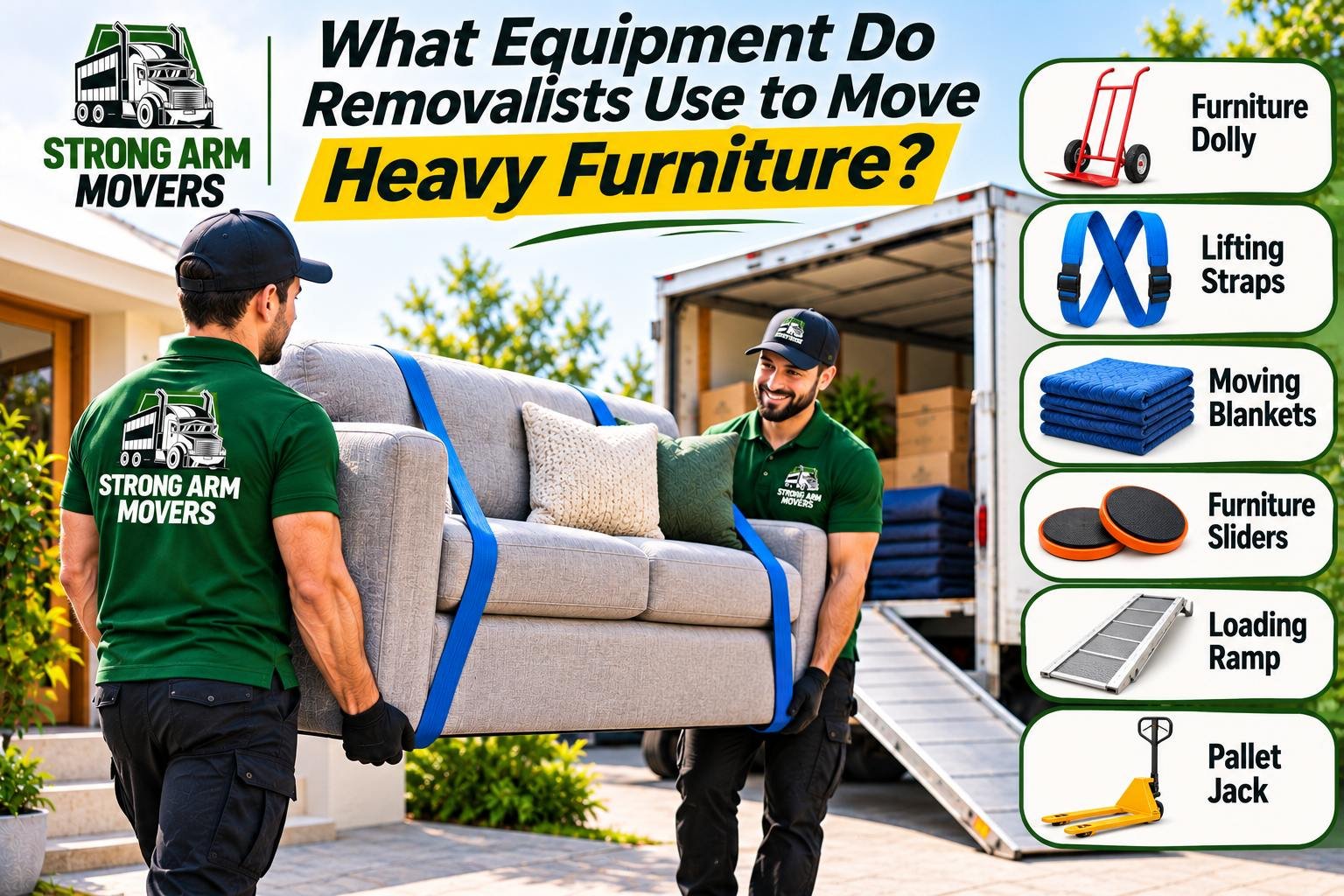
Removalists move heavy furniture with hand trolleys, flat dollies, lifting straps, moving blankets, ratchet straps and a truck with a ramp or tail lift, plus specialist gear such as piano boards for the heaviest items. The right equipment protects the furniture, your home and the crew, and it’s one of the clearest signs of whether a removalist is set up for your job.
Quick answer: A good crew brings trolleys and dollies for rolling, straps for lifting and securing, blankets and wrap for protection, and floor and door-frame covers for your home. For pianos, safes, pool tables or upper floors, ask in advance what extra gear and how many people they’ll send.
The basic kit every removalist should bring
Every removal crew should arrive with equipment for rolling heavy items, protecting them and tying them down in the truck. Here’s what each piece does:
| Equipment | What it’s for |
|---|---|
| Hand trolley (upright trolley) | Stacks of boxes, fridges, washing machines, tall cabinets |
| Flat dolly (furniture dolly) | Rolling wide, heavy items such as sideboards, dressers and safes along flat floors |
| Lifting straps | Spreading the weight of awkward items between two people |
| Moving blankets / furniture pads | Wrapping timber, glass and polished surfaces against knocks and scratches |
| Stretch wrap | Holding blankets in place and keeping doors and drawers closed |
| Ratchet straps and tie rails | Securing furniture to the truck walls so nothing shifts in transit |
| Ramp or hydraulic tail lift | Getting heavy items into the truck without lifting them to deck height |
| Basic tool kit | Taking legs off tables and bed frames, and putting them back on |
Truck size matters too. Our trucks range from 4.5 tonne to 10 tonne, so the truck can match the size of the home. [CLIENT TO CONFIRM: list of the equipment Strong Arm crews carry as standard, e.g. trolleys, dollies, piano boards, straps, blankets, tail lifts, floor runners, so this section only describes real kit.]
How do removalists move fridges, safes and gym equipment?
Heavy, top-heavy or dense items are moved upright on a strapped hand trolley or flat on a dolly, never “walked” across the floor. The method depends on the item:
- Fridges: emptied, defrosted and dried the day before, doors taped or wrapped shut, then strapped to a hand trolley and moved upright.
- Washing machines: drained and disconnected before the crew arrives, ideally with the transit bolts refitted if you still have them.
- Safes: moved on a heavy-duty trolley or dolly with extra crew. Tell the removalist the exact weight and where it’s bolted down.
- Gym equipment: treadmills, multi-gyms and weight racks are often partly dismantled. Free weights go in small, strong boxes or are carried loose.
- Pool tables and pianos: specialist jobs. Pianos travel on a piano board with straps and padding, and pool tables are usually dismantled, with the slate moved separately. Our pool table removalists and piano movers plan these before the day.
Disconnecting and reconnecting appliances, and dismantling complex items, need to be agreed in writing before moving day. Some appliances need a licensed tradesperson.
Stairs and tight spaces
For stairs and tight spaces, removalists rely on lifting straps, a strong crew and careful planning more than on any single tool. Stair-climbing trolleys and piano boards help on steps, and furniture is often turned on its end or partly dismantled to clear tight turns.
- Measure doorways, stair widths and landings before moving day.
- Expect heavier items on stairs to need an extra person.
- Let the removalist know about spiral or very steep staircases when you ask for a quote.
Protecting floors, walls and doorways
A careful crew protects your home as well as your furniture. Look for:
- Floor runners or hardboard on timber, tiles and new carpet, especially along the main path.
- Door-frame and corner protectors, or blankets taped over frames.
- Banister and lift padding in apartment buildings, which building managers often ask for.
- Blankets on every piece before it leaves the room, not just once it reaches the truck.
Flat-pack furniture and glass or marble tops need extra care. Pack glass and marble properly or ask the removalist to do it, as damage to poorly packed glass or marble is usually excluded from cover.
When a hoist or extra crew is needed
A hoist or crane is needed when a large item can’t fit through the stairs, lift or doors, for example a big couch going to an upper-floor balcony. More often, the answer is more people: a heavy item that two people can roll on flat ground may need four on stairs.
[CLIENT TO CONFIRM: whether Strong Arm offers or arranges hoist/crane jobs. If not, say so and suggest the customer raises it at quote time.]
Our crews will stop if a lift or path isn’t safe. We won’t move items from unsafe areas, and work can be paused if there’s a safety risk, which protects you, your home and the team.
What to ask your removalist before moving day
Ask these questions when you book so the right gear and crew turn up on the day:
- What equipment will you bring for my heaviest item?
- How many movers will you send, and is that enough for the stairs?
- Does the truck have a tail lift or ramp?
- How will you protect floors, walls and the lift?
- Will you dismantle and reassemble beds, tables or gym gear?
- What happens if something can’t fit through the door?
- What insurance cover applies, and what’s excluded?
For more, see our full list of questions to ask a removalist before you book, and our tips on how to pack furniture when moving.